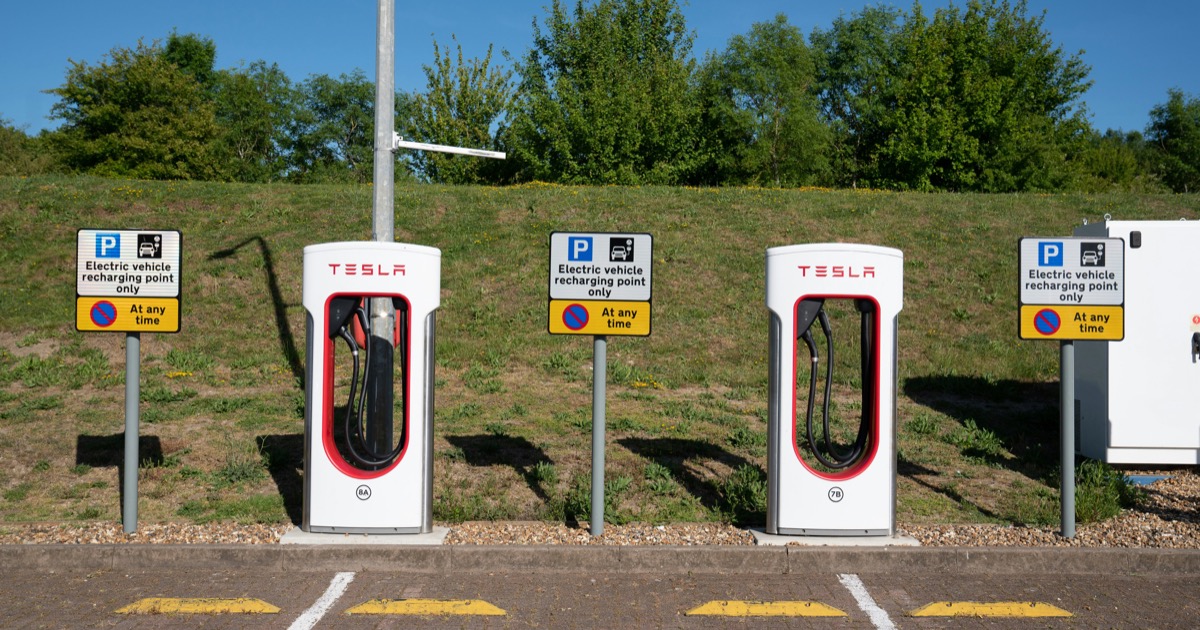
Tesla Supercharger Cost per kWh (2026): US & Europe Price Guide
Typical Tesla Supercharger rates in 2026: $0.25–$0.60 per kWh in the US, €0.30–€0.67 in Europe. Compare regions, home vs. Supercharger costs, and practical ways to pay less.


How Much Does Tesla Supercharging Cost? Complete Pricing Guide for 2026
Whether you’re a new Tesla owner planning your first road trip or a long-time driver trying to budget monthly charging costs, understanding Tesla Supercharger pricing is essential. Supercharger rates have changed several times over the years, vary significantly by location, and depend on factors like time of day and your vehicle’s charging speed.
This guide breaks down everything you need to know about Tesla Supercharging costs in 2026 — from current per-kWh rates across different regions to practical strategies for keeping your charging bill as low as possible.
How Tesla Supercharger Pricing Works
Tesla Superchargers use one of two billing models, depending on where you charge:
- Per-kWh billing: You pay for the exact amount of energy delivered to your vehicle, measured in kilowatt-hours (kWh). This is the most common model in the US and most of Europe.
- Per-minute billing: In regions where per-kWh billing isn’t allowed by local regulations, Tesla charges by the minute. Rates are tiered based on your charging speed — faster charging costs more per minute.
Each Supercharger station displays its pricing before you plug in (visible in the Tesla app and on the in-car navigation screen), so you always know what you’ll pay before a session starts.
Current Tesla Supercharger Rates in 2026
Tesla Supercharger pricing is not uniform — it varies by location, sometimes even between stations in the same city. Here are the typical rate ranges you can expect:
United States
- Average rate: $0.35 – $0.50 per kWh
- Low-cost stations (rural areas, off-peak): as low as $0.25 per kWh
- High-cost stations (urban centers, California, peak hours): up to $0.60 per kWh
- Idle fees: $0.50 – $1.00 per minute if you remain plugged in after charging completes and the station is at least 50% occupied
For a deeper US-specific breakdown — including what a typical session costs and how time-of-use pricing works — see Current Tesla Supercharger Rates in the US.
Europe
- Western Europe (Germany, France, Netherlands): €0.35 – €0.55 per kWh
- Southern Europe (Spain, Italy, Portugal): €0.30 – €0.45 per kWh
- Northern Europe (Norway, Sweden, Denmark, Finland): €0.40 – €0.60 per kWh (varies with local electricity costs)
- UK: £0.35 – £0.55 per kWh
Other Regions
- Canada: CAD $0.40 – $0.60 per kWh
- Australia: AUD $0.45 – $0.65 per kWh
- China: ¥1.50 – ¥2.50 per kWh
- Japan: ¥50 – ¥80 per kWh
- South Korea: ₩350 – ₩500 per kWh
Important note: These rates are approximate and change regularly. Tesla adjusts pricing based on local electricity costs, demand, and grid conditions. Always check the Tesla app for the latest rates at your preferred station.
What Affects Your Supercharging Cost
Several factors influence how much you’ll actually pay per charging session:
1. Location and Local Electricity Rates
Supercharger pricing closely tracks local electricity costs. Stations in areas with cheap electricity (like parts of the US Midwest) tend to be significantly cheaper than those in high-cost markets (like California or Northern Europe).
2. Time of Day (Peak vs. Off-Peak)
Many Supercharger stations now implement time-of-use pricing, offering lower rates during off-peak hours (typically late night and early morning). The difference can be significant — sometimes 30% to 40% lower than peak-hour rates. The Tesla app clearly shows peak vs. off-peak pricing for each station.
3. Charging Speed and Battery Level
Your cost per session depends on how much energy you add. Charging from 10% to 80% is the fastest and most cost-efficient range. Above 80%, charging speed slows dramatically (to protect battery health), and if you’re billed per minute, that slower speed means you’re paying more per kWh delivered.
4. Idle Fees
If you leave your Tesla plugged in after charging completes and the station is busy, Tesla charges idle fees of $0.50 to $1.00 per minute. These fees are designed to free up stalls for other drivers but can add up quickly if you’re not paying attention.
5. Vehicle Model and Efficiency
Different Tesla models consume energy at different rates. A Model 3 Standard Range averaging 250 Wh/mi will cost less per mile than a Model X averaging 340 Wh/mi, even at the same Supercharger rate.
Real-World Supercharging Cost Examples
Let’s look at what typical charging sessions actually cost:
Scenario 1: Daily Commuter Top-Up
- Vehicle: Model 3 Long Range
- Charge: 30% to 80% (roughly 40 kWh added)
- Rate: $0.40/kWh
- Session cost: $16.00
- Range added: ~150 miles
Scenario 2: Road Trip Full Charge
- Vehicle: Model Y Long Range
- Charge: 10% to 90% (roughly 60 kWh added)
- Rate: $0.45/kWh
- Session cost: $27.00
- Range added: ~220 miles
Scenario 3: Quick Top-Up in Europe
- Vehicle: Model 3
- Charge: 40% to 70% (roughly 22 kWh added)
- Rate: €0.45/kWh
- Session cost: €9.90
- Range added: ~110 km
Monthly Supercharging Cost Estimates
If you rely heavily on Supercharging, here’s what to expect monthly:
| Driving Profile | Monthly Miles | Approx. kWh | Est. Monthly Cost (US) |
|---|---|---|---|
| Light commuter | 500 mi | 130 kWh | $45 – $65 |
| Average driver | 1,000 mi | 260 kWh | $90 – $130 |
| Heavy driver / rideshare | 2,500 mi | 650 kWh | $225 – $325 |
| Road warrior / fleet | 4,000+ mi | 1,040+ kWh | $360 – $520+ |
These estimates assume an average efficiency of 260 Wh/mi and a mix of peak and off-peak rates. Your actual costs will vary based on your vehicle, driving habits, and local pricing.
Know your actual Supercharger costs
These are averages. PlaidInvoices shows your real monthly spending — exact cost per kWh, total by month, with CSV export for budgeting.
Tesla Supercharger vs. Home Charging: Cost Comparison
For most Tesla owners, home charging is significantly cheaper than Supercharging. Here’s how they compare:
Home Charging Costs
- Average US residential electricity rate: $0.12 – $0.18 per kWh
- Off-peak rates (with time-of-use plan): $0.06 – $0.10 per kWh
- Cost per mile: approximately $0.03 – $0.05
Supercharger Costs
- Average US Supercharger rate: $0.35 – $0.50 per kWh
- Cost per mile: approximately $0.09 – $0.13
The Bottom Line
Home charging is typically 2x to 4x cheaper than Supercharging. For a driver covering 1,000 miles per month:
- Home charging cost: $31 – $47/month
- Supercharger cost: $91 – $130/month
- Annual savings from home charging: $720 – $996
That said, Supercharging remains essential for road trips and situations where home charging isn’t available — and it’s still significantly cheaper than gasoline. At current US gas prices, fueling an equivalent gas car for 1,000 miles would cost roughly $130 – $180 per month.
Tesla Supercharger vs. Third-Party Charging Networks
Tesla isn’t the only fast-charging option. Here’s how Supercharger pricing compares with major third-party networks:
Electrify America
- Base rate: $0.48 – $0.56 per kWh (guest pricing)
- Pass+ members: $0.36 – $0.44 per kWh ($4/month membership)
- Reliability: Improving but historically lower than Tesla’s network
ChargePoint
- Rates vary by station owner: typically $0.30 – $0.60 per kWh for DC fast charging
- Pricing set by individual station hosts, not standardized
- Often more expensive for fast charging compared to Tesla
IONITY (Europe)
- Standard rate: €0.79 per kWh (without membership)
- Membership rate: €0.35 per kWh (€12.99/month)
- Most expensive without a membership plan
Key Takeaway
Tesla Superchargers are generally competitive or cheaper than third-party alternatives, especially when you factor in reliability and the seamless plug-and-charge experience. Third-party networks often require memberships to match Tesla’s pricing.
7 Tips to Reduce Your Supercharging Costs
If you Supercharge frequently, these strategies can meaningfully reduce your costs:
Charge during off-peak hours: Many stations offer 30% to 40% lower rates late at night or early morning. The Tesla app shows time-of-use pricing for each station.
Charge to 80%, not 100%: Charging above 80% is much slower and less cost-efficient, especially on per-minute billing. You’ll spend more time (and money) for diminishing returns.
Plan routes with cheaper stations: Use the Tesla app or third-party tools like A Better Route Planner to identify lower-cost stations along your route.
Monitor for pricing changes: Tesla regularly adjusts Supercharger rates. Some stations drop prices temporarily to attract usage during low-demand periods.
Avoid idle fees: Set a phone notification or use your Tesla app alerts to unplug promptly when charging completes. Idle fees of $0.50 to $1.00 per minute add up fast.
Precondition your battery: Using your Tesla’s route planner to navigate to a Supercharger automatically preconditions the battery, which enables faster (and more cost-efficient) charging.
Combine with home charging: Use Supercharging primarily for road trips and top-ups, and handle daily charging at home where rates are 2x to 4x cheaper.
Why Tracking Your Supercharger Expenses Matters
Beyond simple budgeting, keeping track of your Supercharging expenses has real financial benefits:
For Business Owners
If you use your Tesla for business, every Supercharger session is a potentially deductible expense. Properly documented charging costs can reduce your tax liability by hundreds or even thousands of dollars annually. However, claiming these deductions requires organized records — individual invoices for each session, dates, amounts, and business purpose.
For Employees Seeking Reimbursement
If you use a personal Tesla for work travel, organized Supercharger invoices make it simple to submit accurate reimbursement requests to your employer. No more guessing at amounts or losing track of individual sessions.
For Fleet Managers
Managing Supercharger costs across multiple vehicles requires consolidated expense data. Without a system to collect and organize invoices, fleet charging costs become an accounting headache.
For Anyone Who Budgets
Even if you’re not a business owner, knowing exactly what you spend on Supercharging each month helps you budget accurately and identify opportunities to save.
How PlaidInvoices Simplifies Supercharger Cost Tracking
Manually downloading each Supercharger invoice from the Tesla app is tedious — especially if you charge frequently. Each session generates a separate invoice, and the app only lets you download them one at a time.
PlaidInvoices automates this entire process:
- Automatic Invoice Collection: Connect your Tesla account once, and PlaidInvoices automatically collects every Supercharger invoice as it’s generated.
- Monthly Email Delivery: Receive all your invoices at the end of each month, organized and ready for your records or accountant.
- Instant Delivery: Get invoices sent immediately after each charging session.
- Web Dashboard: View, filter, and search your complete charging history from any device.
- Bulk Download: Download all invoices for a specific month or date range with one click.
- CSV Export: Export your charging data for accounting software, tax preparation, or custom analysis.
- Analytics: See monthly totals, kWh consumed, number of sessions, and average cost per kWh at a glance.
Whether you’re tracking Supercharger costs for business tax deductions, employer reimbursement, fleet management, or personal budgeting, PlaidInvoices eliminates the manual work and ensures you never miss an invoice.
What About YOUR Actual Costs?
The prices above are general ranges. Your real monthly Supercharger bill depends on your routes, charging habits, and local rates. PlaidInvoices pulls your exact charging history so you can see:
- Exact amount spent per month
- Your real cost per kWh at each station
- CSV export for budgeting and expense reports
Conclusion
Tesla Supercharging in 2026 typically costs between $0.35 and $0.50 per kWh in the US (with similar variation in other markets), making it significantly cheaper than gasoline but more expensive than home charging. Your actual costs depend on location, time of day, how much you charge, and your vehicle’s efficiency.
The smartest approach is to use home charging as your primary method and rely on Supercharging for road trips and top-ups. When you do Supercharge, simple habits like charging during off-peak hours, stopping at 80%, and avoiding idle fees can reduce your costs by 20% to 30%.
And no matter how you charge, keeping organized records of your expenses pays off — whether for tax deductions, reimbursement, or simply knowing where your money goes. Tools like PlaidInvoices make that effortless by automatically collecting and organizing every Supercharger invoice for you.
Know your actual Supercharger costs
These are averages. PlaidInvoices shows your real monthly spending — exact cost per kWh, total by month, with CSV export for budgeting.
-
Detailed Analytics (new)
See monthly totals, kWh, sessions, and average cost per kWh so you and your accountant understand your charging costs at a glance.
-
Export to CSV (new)
Export your Tesla Supercharger charges and invoices as CSV for accounting, tax reporting, or spreadsheets.
-
Automatic invoice delivery to email at the end of the month
Automatically send invoices to email. No more manually downloading and copying invoices from the mobile app.
Secure Tesla Integration
We use Tesla’s official OAuth flow, show the exact permissions requested, never get car-control access, and keep only the data needed to run the service.

-
Sign in with Tesla
Securely connect your Tesla account. We only receive access to your profile information and charging data.
-
Access Your Invoices
Access your Supercharger invoices directly through our dashboard. No need to use the mobile app.
-
Generate Invoices
Get professional invoices automatically delivered to your email at the end of each month.